
The Trail Is Getting Easier to Follow: Two Years After Helene
 Walter Barkrite
WESTERN NORTH CAROLINA — I've been a mountain hound most of my life, and I've learned a few things.
You don't chase a porcupine. You don't trust a quiet raccoon. And when the river starts acting like it's got somewhere to be, you get your nose out of the water and head for higher ground. Hurricane Helene came through here nearly two years ago, and I'll tell you something: I've smelled plenty of bad weather in my day, but that one was different.
The rain came down hard. The creeks got mean. Trees came down. Roads disappeared. Houses were damaged. And for a while, the whole mountain smelled like mud, gasoline, wet lumber and worry. I didn't much care for it.
Two years later, things smell better. Not normal. Not yet. But better. If you put your nose to the wind, you can pick up the smell of fresh-cut lumber, new pavement and construction crews working from sunup to sundown. There are reopened businesses, repaired roads and new infrastructure scattered across the mountains. Humans call it "long-term recovery." I call it getting the kennel back together.
A lot of work remains. Roads and bridges are still being repaired. Slopes have to be stabilized. Water and wastewater systems are being rebuilt. Houses are going up. State and federal money continues to flow into Western North Carolina for housing, infrastructure and economic recovery. I don't understand federal funding formulas. I do understand a new bridge. A bridge means my human doesn't have to take some ridiculous three-hour detour just to get me to the good trail. That matters.
Water matters, too. In Hot Springs, officials recently celebrated completion of a new wastewater treatment plant to replace a system damaged by Helene. Humans stood around in clean shirts and hard hats and gave speeches. I wasn't invited. Probably because I would've lifted my leg on the podium. Still, I approve of the new plant.
Housing is another story. Some families are still waiting for homes to be repaired or replaced, while new affordable housing projects are being funded across the region. For the people living through it, recovery isn't just a line on a government dashboard. It's the difference between sleeping in your own bed and sleeping somewhere else. It's knowing whether you're staying in the place you've called home for years. It's knowing where the dog bowl goes. Now that last one is serious.
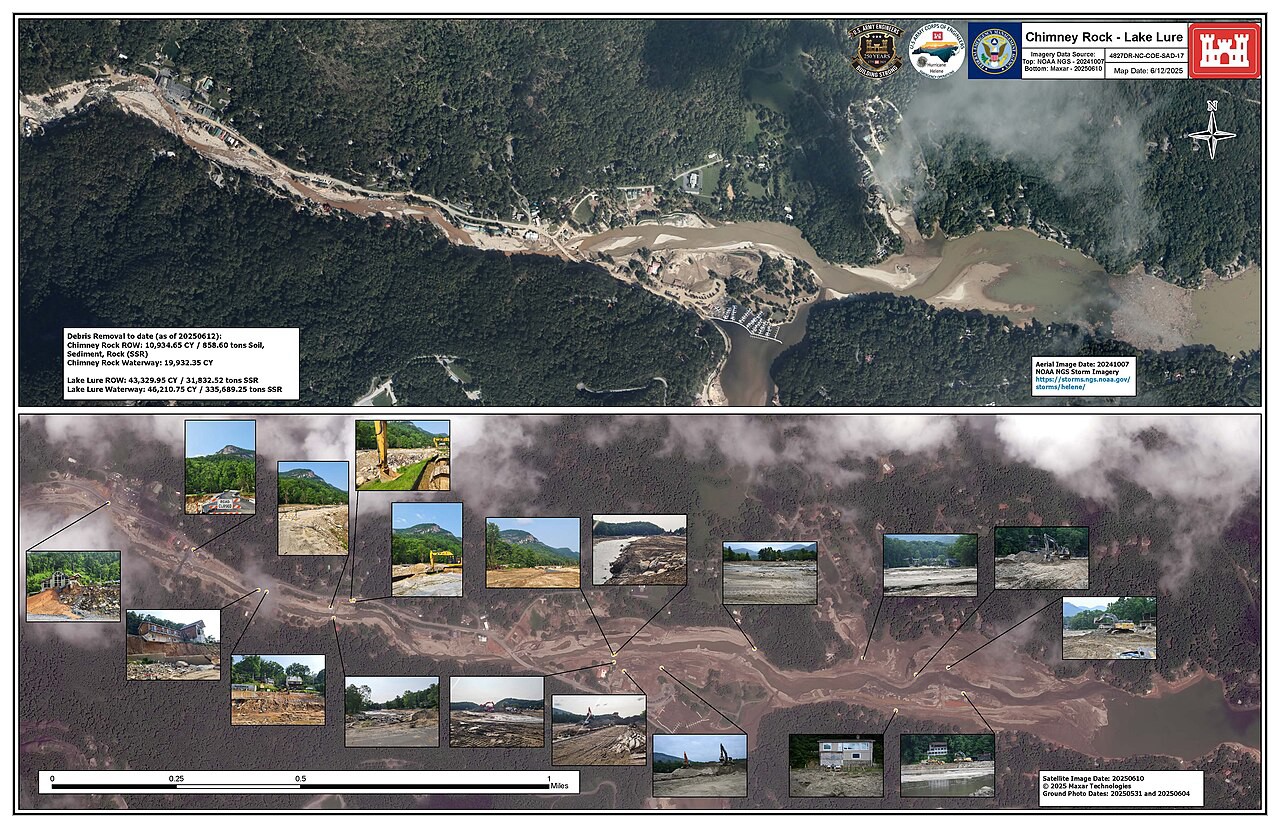
I've watched these mountains a long time. I've watched summer thunderstorms roll over the ridges. I've chased deer I had absolutely no business chasing. But I've never seen people work like they've worked since Helene. They've fixed roads. Opened shops. Helped neighbors. Raised money. Rebuilt. Sometimes they've argued about how to do it. Give two people a shovel and they'll eventually have three opinions about where it belongs. But they keep going. And that's what you notice now. The destruction is still there in places. You can see it if you know where to look. A missing house. A changed creek bank. A slope that doesn't look quite right. A road that still isn't what it used to be.
But there's more now. Life. Kids playing. Trucks rolling down repaired roads. Businesses opening their doors. Folks sitting on porches again. And dogs. Don't forget the dogs. We're getting back to our important mountain business: sniffing every tree, barking at absolutely nothing and keeping close tabs on the whereabouts of suspicious squirrels. That's how you know things are improving.
So, here's my report from the field: western North Carolina isn't finished recovering. Not by a long shot. But the trail is getting easier to follow. And after what we've been through, I'll take that.
Now, if you'll excuse me, there's a squirrel up ahead that's been acting suspicious for three consecutive mornings. Somebody's got to investigate. And unlike most government recovery projects, I can be on the scene in under five minutes.